
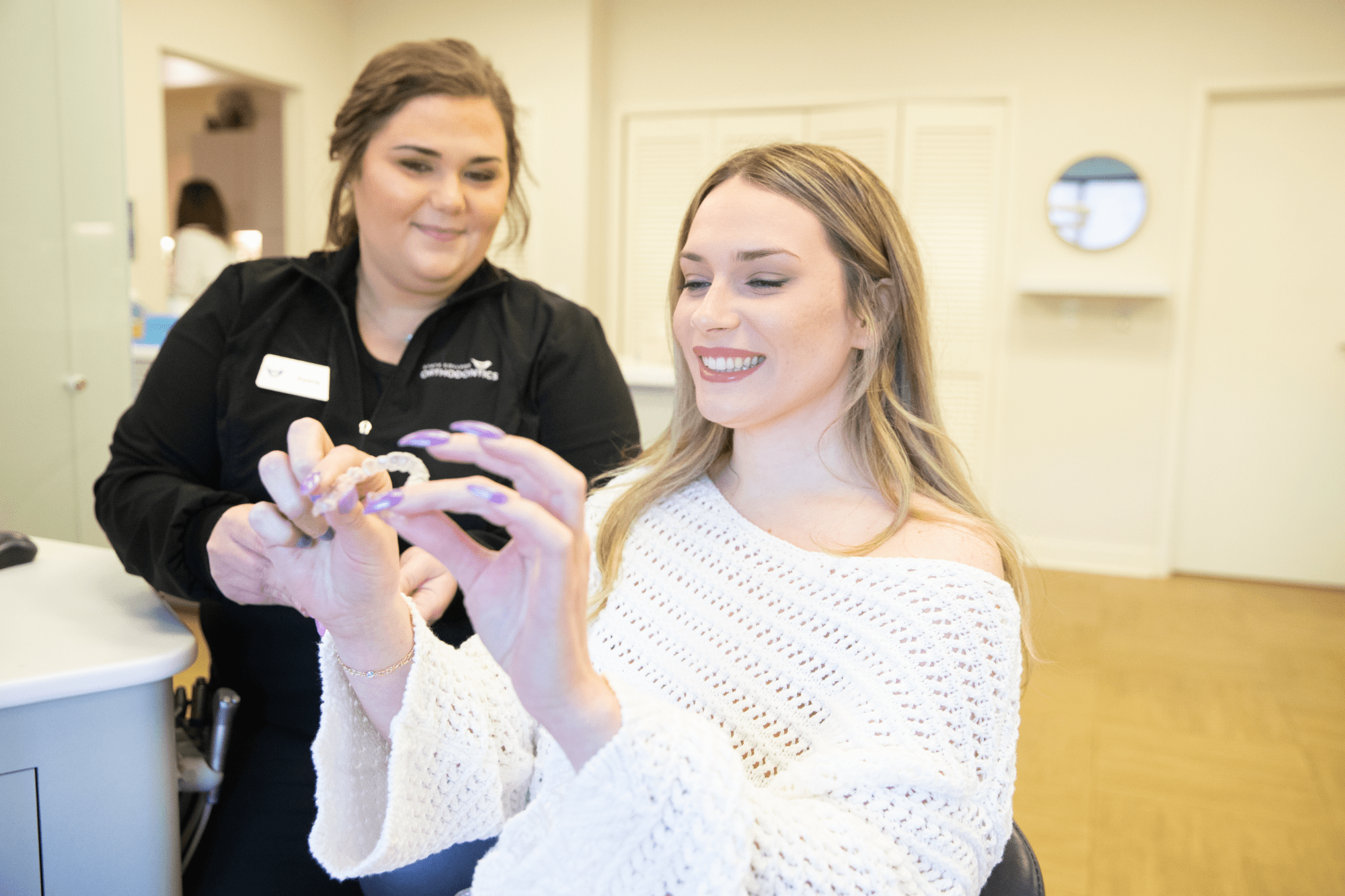
Choosing between clear aligners and brackets is one of the biggest decisions you’ll make before starting treatment. Both work. Both deliver straighter teeth. The right pick depends on your lifestyle and the complexity of your case. This guide breaks it all down so you can walk into your free consult feeling informed and ready to make a confident choice for yourself or your child.
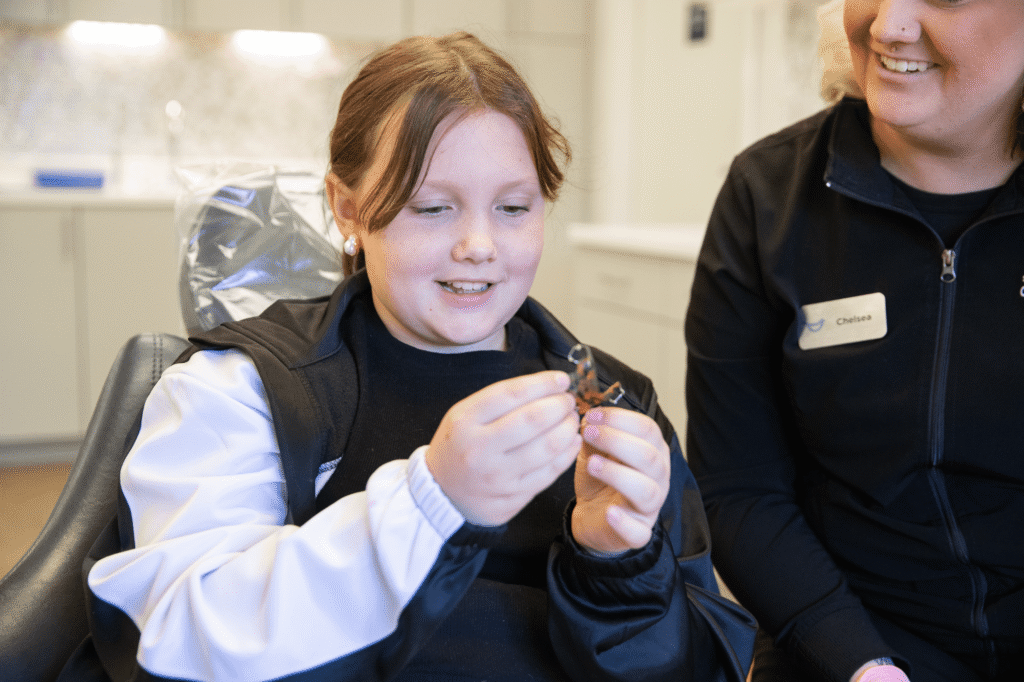
What Are Invisalign and Braces?
Understanding what each treatment actually is matters before you compare them. Invisalign is a series of clear, removable custom aligners that gradually shift your teeth into place. Metal braces are fixed brackets bonded to your teeth and connected by thin archwires that guide movement over time.
Both are proven orthodontic options, and both are offered at our community practice. Dr. Ray offers both to help you and your family achieve healthier, straighter smiles that last a lifetime.
The real question isn’t “which is better?” It’s “which is better for you?” Lifestyle and case complexity both play a role. Some people love the flexibility of removable aligners. Others prefer the set-it-and-forget-it nature of fixed braces. Dr. Ray will walk you through both at your free exam so the choice feels clear and informed.
How Each Treatment Works
The mechanics of each option are different, and understanding them helps you picture daily life in treatment.
How braces work:
- Dr. Ray bonds small brackets to the front of each tooth.
- A thin archwire connects the brackets and applies gentle, continuous pressure.
- You visit the practice regularly for adjustments.
- Elastic ties (sometimes colorful) hold the wire in place and can be swapped at each visit.
How Invisalign works:
- Dr. Ray takes easy, pain-free scans using 3D digital imaging.
- A computer-mapped treatment plan is designed just for your teeth.
- You receive a series of custom clear aligners.
- You wear each tray 20-22 hours a day, swapping to the next set every 1-2 weeks.
- Periodic check-ins let Dr. Ray confirm progress.
Here’s the key difference: braces work passively. Once they’re on, they’re always working. Invisalign depends on you. If the trays aren’t in your mouth, they’re not moving your teeth. That compliance factor is a big part of the decision for many families, especially those with younger children.
Treatment length varies by case, and mild cases with Invisalign can sometimes wrap up sooner.
Benefits of Invisalign vs. Braces
Each option has real strengths. Here’s a clear look at what you gain with either choice.
What Are the Benefits of Invisalign?
- Nearly invisible appearance, great for adults and teens who want discretion
- Removable for eating, brushing, and special occasions
- No food restrictions (take them out and enjoy whatever you want)
- Easier to brush and floss normally
- Fewer in-office visits thanks to longer intervals between check-ins
- Smooth plastic that’s gentle against cheeks and lips
- No brackets or wires to repair if something comes loose
What Are the Benefits of Braces?
- Highly effective for complex cases, including severe crowding or bite issues
- No compliance worries, they’re working around the clock
- Colorful elastics let teens personalize their look at every visit
- Great for younger kids who might lose or forget removable trays
- Modern metal braces are smaller and more comfortable than older versions
- Clear braces offer a more subtle look while keeping the fixed-bracket benefits
Many aligner wearers find it easier to maintain good oral hygiene during treatment because they can brush and floss without working around brackets. Both options are generally considered safe and effective ways to improve your bite and smile when guided by a trained orthodontist.
The bottom line? You can’t go wrong with either. You’ll end up with straighter teeth, a healthier bite, and a smile you want to show off every day.

Invisalign vs. Braces: Side-by-Side Comparison
Here’s a quick-reference comparison to help you weigh your options at a glance.
| Feature | Invisalign | Braces |
|---|---|---|
| Visibility | Nearly invisible | Visible brackets and wires |
| Comfort | Smooth plastic | Possible wire or bracket irritation |
| Treatment time | Varies by case; mild cases can finish sooner | Varies by case |
| Compliance | High discipline required (20-22 hrs/day) | Passive, always working |
| Eating | Remove trays to eat | Avoid sticky, hard, or chewy foods |
| Hygiene | Brush and floss normally | Needs special tools and extra time |
| Office visits | Longer gaps between check-ins | Regular adjustment visits |
| Best for | Mild to moderate cases, lifestyle flexibility | Complex cases, younger kids, all case types |
Use this table as a conversation starter at your free consult. Dr. Ray can look at your specific case and tell you which column fits your life best, taking into account your goals and daily routine.
Who Is a Good Candidate for Each?
Not every treatment fits every mouth. Here’s how Dr. Ray typically thinks about candidacy.
Invisalign tends to work well for:
- Disciplined teens and adults with mild to moderate alignment issues
- People in professional settings who prefer a discreet look
- College students who travel often and need flexibility
- Adults returning to treatment after orthodontics as a child
- Anyone who plays wind instruments or contact sports and wants removable trays
Braces are often the better pick for:
- Complex bite issues, severe crowding, or significant rotations
- Younger kids who might lose or forget to wear aligners
- Patients who prefer not to track wear time
- Cases where precise tooth movement requires fixed appliances
Lifestyle matters too. If you’re a busy student juggling classes, work, and a social life, the flexibility of Invisalign can be a real plus. If you have a middle schooler who’s already losing track of retainers at the dinner table, braces might save everyone some stress.
Here’s the honest truth: only an in-person evaluation can tell you what’s actually best. Dr. Ray will give you a straight answer based on your mouth, not a sales pitch, so you can feel confident in whichever direction you choose.
Families from Bellefonte and nearby towns choose between these options at our State College office. Patients from Lewistown go through the same exam and consult before choosing.

Frequently Asked Questions
Which works better, braces or Invisalign?
Neither is universally “better.” Both achieve excellent results when matched to the right case. Braces often edge out Invisalign for complex bite corrections and severe crowding, while Invisalign shines for mild-to-moderate cases where discretion and flexibility matter. Dr. Ray can tell you which is best for your smile at a free consult.
Why do people quit Invisalign?
The most common reasons are compliance fatigue (not wearing trays the required 20-22 hours a day), lost or damaged aligners, and early discomfort when switching to a new tray. Most of these are solvable with good habits and support from your orthodontist. If you think you’ll struggle to wear trays consistently, braces may be the smarter pick.
How long does each treatment take?
Treatment times vary based on case complexity, and mild Invisalign cases can sometimes finish sooner. Dr. Ray will give you a personalized timeline at your free exam.
Still weighing your options? That’s exactly what a free consult is for. Dr. Ray and our friendly team are happy to answer your questions, review your smile, and talk through what each path could look like for you, so you can decide what feels right at your own pace.