
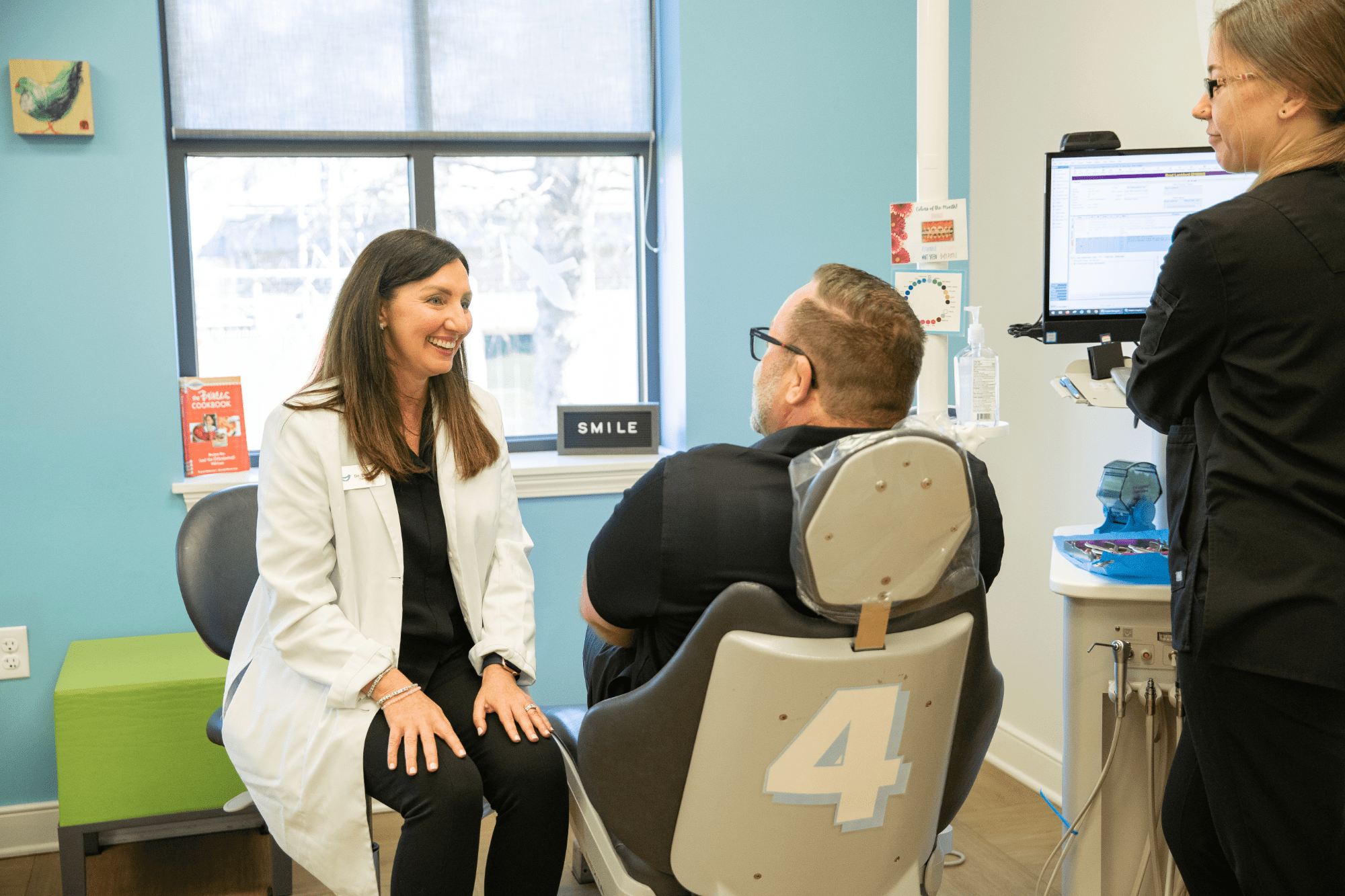
A first orthodontic visit is a no-obligation exam where Dr. Ray looks at how your child’s teeth, jaws, and bite are developing, then tells you plainly whether anything needs attention. There’s no drilling, no braces glued on that day, and no commitment attached. Think of it as a developmental checkpoint rather than the starting line for treatment.
Your child’s first orthodontic visit should happen no later than age 7. According to the American Association of Orthodontists, this is when the first permanent molars and front teeth have usually come in, giving Dr. Ray a clear view of how the bite is forming. The visit is an evaluation, not a commitment to braces. The importance of age 7 comes down to timing: enough permanent teeth have arrived to show a pattern, while enough growth is still ahead to guide it.
So if you’re asking, “When should my child’s first orthodontic visit be?” and your child is around second grade, the timing is right.
Most parents are surprised to learn that the majority of 7-year-olds walk out with nothing more than a plan to check back in. Their teeth are still arriving. Their jaws are still growing. Dr. Ray simply wants a baseline so she can watch how everything develops.
Some kids benefit from being seen earlier. If you notice a thumb-sucking habit that won’t quit, teeth biting the wrong way, or a jaw that shifts when your child closes down, an earlier look makes sense.
And if your child is already 10, 13, or 16? You haven’t missed anything. Orthodontics works at every age, and adults make up a growing share of the people Dr. Ray treats.
What Happens at Your Child’s First Orthodontic Visit
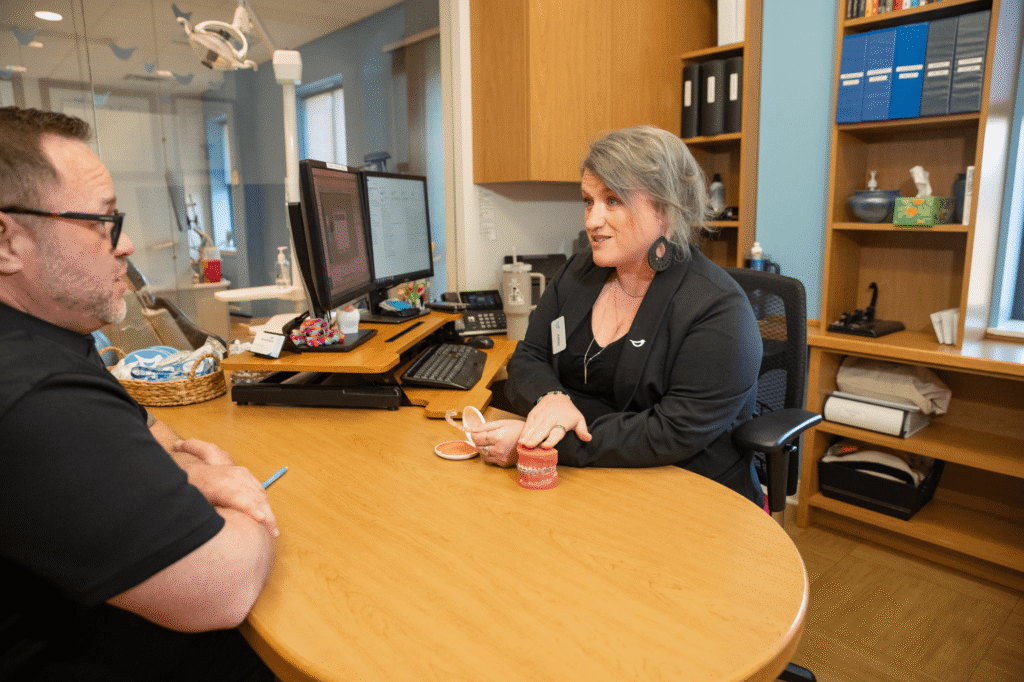
A first orthodontic visit typically takes 30 to 60 minutes and involves no drilling, no needles, and no discomfort. Dr. Ray reviews your child’s history, examines the teeth and jaws, takes digital records if needed, and then explains what she sees. You leave with a clear answer about whether treatment is needed now, later, or not at all.
Here’s how the visit goes:
- Health and dental history review. We’ll ask about habits like thumb-sucking, pacifier use, mouth breathing, nail biting, and any past injuries to the teeth or jaw. These details matter more than parents expect.
- Clinical exam. Dr. Ray checks the teeth, gums, bite relationship, jaw joints, and facial growth patterns. She’s looking at how the upper and lower teeth meet and how much room the permanent teeth will have.
- Digital radiographs and easy, pain-free scans. If needed, we capture images that show unerupted teeth hiding beneath the gums, teeth that are missing entirely, or teeth pointing the wrong direction. None of that shows up when you look in the mirror, which is why imaging occasionally reshapes the picture entirely.
- A straightforward conversation. Dr. Ray walks you through her findings in plain language and shows you what she’s seeing. If treatment is recommended, she explains the timing, the options, and the reasoning.
- A growth monitoring plan. When treatment isn’t needed yet, your child joins our observation program with periodic check-ins every 6 to 12 months at no charge.
Kids usually enjoy this visit. There’s nothing to brace for, and our team makes a point of talking to your child directly, not just over their head.
Why an Early Orthodontic Evaluation Matters
An early orthodontic evaluation matters because a child’s jaws are still growing and can still be guided, so bite issues like crossbites, crowding, and habit-related changes are often simpler, shorter, and less involved to correct in childhood than after growth has finished. Timing changes what’s possible. A growing child’s bones respond to guidance in ways an adult’s simply don’t, which means certain concerns are far easier to correct at 8 than at 18.
An early evaluation gives Dr. Ray the chance to:
- Guide jaw growth while the bones are still developing. Narrow upper jaws, for example, can often be widened during childhood without more involved treatment later.
- Create room for permanent teeth to erupt properly. Making space early can reduce the likelihood of needing extractions down the road.
- Catch crossbites, underbites, and severe protrusion before they deepen. These bite relationships tend to become more entrenched with time.
- Address habits that push teeth out of position. Prolonged thumb-sucking and tongue thrusting can reshape the bite, and stopping them early limits the damage.
- Protect front teeth that stick out. Protruding upper front teeth are generally considered more vulnerable to injury during sports and playground falls.
- Simplify what comes later. Children who receive well-timed early care often need shorter, less complicated treatment with braces or Invisalign as teens.
At State College Orthodontics, Dr. Ray performs every one of these evaluations herself, drawing on her specialty orthodontic training and years of watching kids grow into their adult smiles.
Being seen early doesn’t mean anything is rushed. It just means you’ll know what’s coming, and early orthodontic treatment stays a choice rather than a scramble.
Early Treatment vs. Waiting: How to Know Which Is Right
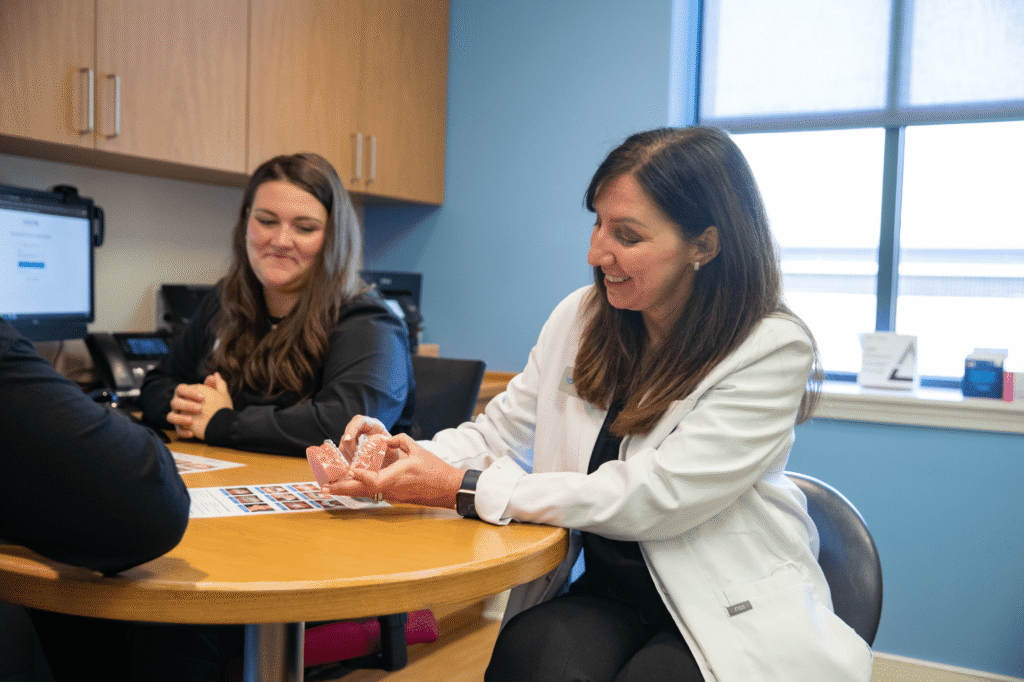
Most children do not need Phase 1 treatment. Monitoring is by far the most common outcome of a first visit, and that’s good news, not a letdown. But when early care is warranted, waiting can turn a manageable situation into a complicated one.
Here’s how the two approaches compare:
| Phase 1 (Ages 7 to 10) | Full Treatment (Ages 11 and Up) | |
|---|---|---|
| Main goal | Guide jaw growth and create space | Align the complete permanent bite |
| Typical appliances | Expanders, space maintainers, partial braces, habit appliances | Metal braces, clear braces, or Invisalign |
| Typical duration | 8 to 12 months | 12 to 24 months |
| Best suited for | Crossbites, underbites, severe crowding, protruding front teeth, harmful habits | Crooked or rotated teeth, spacing, bite refinement, finishing alignment |
| What follows | A resting period, then usually a second phase | Retainers to hold the results |
Treatment times listed here are typical ranges rather than promises, and your child’s case may run shorter or longer.
Phase 1 works on the foundation. Phase 2 handles the finish work once all the permanent teeth have arrived.
When crowding is mild or a gap looks likely to close on its own as more teeth come in, waiting is genuinely the better call. Dr. Ray will tell you when that’s the case, and she’ll keep watching so nothing slips by.
Signs Your Child Should See an Orthodontist Sooner
Age 7 is the benchmark, but certain signs are worth acting on right away. If any of these sound familiar, schedule a free exam rather than waiting for the calendar.
- Baby teeth falling out unusually early or late compared to siblings and classmates
- Trouble chewing or biting into food, or a habit of avoiding certain textures
- Breathing through the mouth instead of the nose, especially during sleep
- Thumb-sucking or pacifier use past age 4, which can reshape the upper arch
- Crowded, overlapping, or blocked-out teeth with nowhere to go
- Front teeth that visibly protrude beyond the lips at rest
- A jaw that shifts, clicks, or pops when opening and closing
- Upper teeth biting inside the lower teeth, a sign of crossbite
- Speech difficulties that a speech therapist has connected to tooth or jaw position
- Lips that don’t close comfortably without effort
None of these mean your child needs braces tomorrow. They just mean it’s worth having Dr. Ray take a look.
Frequently Asked Questions About Your Child’s First Orthodontic Visit
Is 7 too young for braces?
Age 7 is the right time for an evaluation, not usually for braces. Most children who are seen at 7 are simply monitored while their permanent teeth come in. When early orthodontic treatment is recommended, it’s because a specific concern responds much better to correction during active growth.
Does my child need a dentist referral to see an orthodontist?
No referral is needed. You can schedule a free consult with State College Orthodontics directly, and many families do. Your general dentist may still flag something during a checkup, and we’re always glad to coordinate with them.
What if we missed age 7? Is it too late?
Not at all. Age 7 is a guideline, not a deadline. Teens are actually in a great window for orthodontics because their jaws are still growing, and adults get excellent results too. The best time to be seen is whenever you’re wondering about it.
Will my child definitely need braces after the first visit?
No. Many children leave their first visit with a monitoring plan and nothing else. Dr. Ray gives you a straight answer about whether treatment is needed, and if the honest answer is “let’s wait and watch,” that’s what you’ll hear.
How often should we return if no treatment is needed?
Growth check-ins are typically scheduled every 6 to 12 months, depending on what Dr. Ray is watching. These visits are quick, and at State College Orthodontics they come at no charge. Each one lets us confirm that permanent teeth are arriving where they should.
Are digital radiographs (X-rays) safe for young children?
Yes. Modern digital radiographs use a very low dose of radiation, considerably less than older film imaging, and we only take them when the information will change what we recommend. They show us unerupted, missing, or misdirected teeth that simply can’t be seen during an exam.